



- Author: Erik Wesley
- Original thread: https://www.avsforum.com/threads/xgimi-titan-noir-max-projector-review-lifestyle-roots-with-theater-ambition.3343995/
Lifestyle projectors have really started to carve out their own lane in the market. As pricing on more traditional home theater projectors has continued to climb, these newer options have stepped in to fill that $1,500 to $3,500 range with some compelling alternatives.
At the same time, they’ve pushed single-chip DLP performance further than most of us probably expected, and that momentum doesn’t seem to be slowing down anytime soon. From an enthusiast's perspective, it’s actually been fun to watch. It’s also pushing some of the bigger brands to rethink what they’re doing. As a consumer, competition is always good.
As these products have evolved, though, we’re starting to see some companies move into more traditional home theater territory, and that’s where things start to get interesting. One of those companies is XGIMI. They’ve built their reputation around lifestyle projectors, but last year they took a step in a different direction with the TITAN 4K.
Then, what came as a bit of a surprise to a lot of people, at CES 2026, the company followed that up with a new flagship, the TITAN Noir Max. As soon as it was announced, there was a lot of discussion around where it sits in the lineup and how it compares to the TITAN 4K. That’s something I saw come up quite a bit here on the forums, so hopefully I can clarify a few things in this review.

1. Special Features Compared to TITAN
● 0.47-inch DMD
A big part of what separates the TITAN Noir Max from earlier models comes down to the hardware choices XGIMI made here. Instead of sticking with the larger 0.78-inch DMD chip used in the original TITAN, the TITAN Noir Max moves to a 0.47-inch DMD. Now that might sound like a step backward, but there’s a reason for this. The micromirror tilt angle sits at ±14.5 degrees compared to ±17 degrees on the larger chip, and while that doesn’t sound like much, it actually helps reduce stray light and improves the separation between light and dark areas. The result is better control over the image and, in theory, deeper blacks. XGIMI claims up to a 10,000:1 native contrast ratio because of this.
● Black Levels and Contrast
XGIMI is prioritizing black levels and contrast with the TITAN Noir Max rather than just brightness and sharpness on the TITAN. That’s really what this model is built around. It still uses XPR pixel shifting to display a full 3840 × 2160 image, and like most projectors in this category, from a normal seating distance, it’s very hard to tell it’s not native 4K.
● Intelligent Dual Iris System for Brightness and Contrast Balance
Probably the biggest feature of the TITAN Noir Max is that XGIMI has added what it calls an Intelligent Double Iris system. This isn’t something you typically see in this category. There are two separate irises working together. One sits in the light path and controls the overall brightness coming from the laser source, while the second is positioned closer to the lens and fine-tunes how much light actually reaches the screen. The two operate together to balance brightness and contrast depending on the scene.
If you want more control, there’s also a manual mode with five aperture steps ranging from f/2.0 to f/7.0, with the tighter settings prioritizing contrast and black levels or wide open for higher brightness in exchange for lighter blacks.

● Light Engine: Triple RGB Laser System and 7000 ISO Lumens
The light engine is another major difference compared to the original TITAN. The TITAN Noir Max uses a triple RGB laser system, meaning it has separate red, green, and blue lasers instead of a phosphor-based setup. One of the advantages here is improved color performance and consistency, but it also helps address the rainbow effect that some people notice on DLP projectors. Since there’s no color wheel involved, XGIMI integrates its own Anti-RBE implementation directly into the system to minimize that issue.
In terms of brightness, XGIMI rates it at up to 7,000 ISO lumens at peak output, with a lower 5,000 ISO lumens for movie and TV show watching.
● X-Master Red Ring Lens Pro for Distortion Reduction

On the optical side, the TITAN Noir Max uses what XGIMI calls its X-Master Red Ring Lens Pro. It’s a 15-element lens design with multi-layer coatings. It also incorporates aspherical glass elements to help reduce distortion and improve overall image uniformity. The throw ratio ranges from 0.98 to 2.0:1, which gives you a fair amount of flexibility depending on your room. For example, a 100-inch image can be projected from roughly 7.2 to 14.4 feet, depending on zoom.
You also get motorized zoom, focus, and lens shift, with up to ±130% vertical and ±50% horizontal adjustment. There’s also lens memory that will be included in an OTA software update later this year, with support for up to five presets, so you can switch between formats like 16:9 and 2.35:1 without having to readjust everything manually.

● Supported Format: HDR10, HDR10+, HLG, Dolby Vision, and IMAX Enhanced
On the format side, the TITAN Noir Max supports HDR10, HDR10+, HLG, Dolby Vision, and IMAX Enhanced, so it pretty much covers everything you’d expect at this level. For gaming, it supports 4K at 60Hz with ALLM, and while it doesn’t support 4K at 120Hz, it can accept 1080p signals up to 240Hz.
XGIMI also continues to include built-in audio with two 12-watt Harman/Kardon speakers. This isn’t something you typically see on dedicated home theater projectors, but it makes sense coming from a company like XGIMI, which has a lot of experience integrating speakers into its lifestyle models.

2. Design: Suitable for Permanent Setup in Your Home Theater
● Appearance and Installation

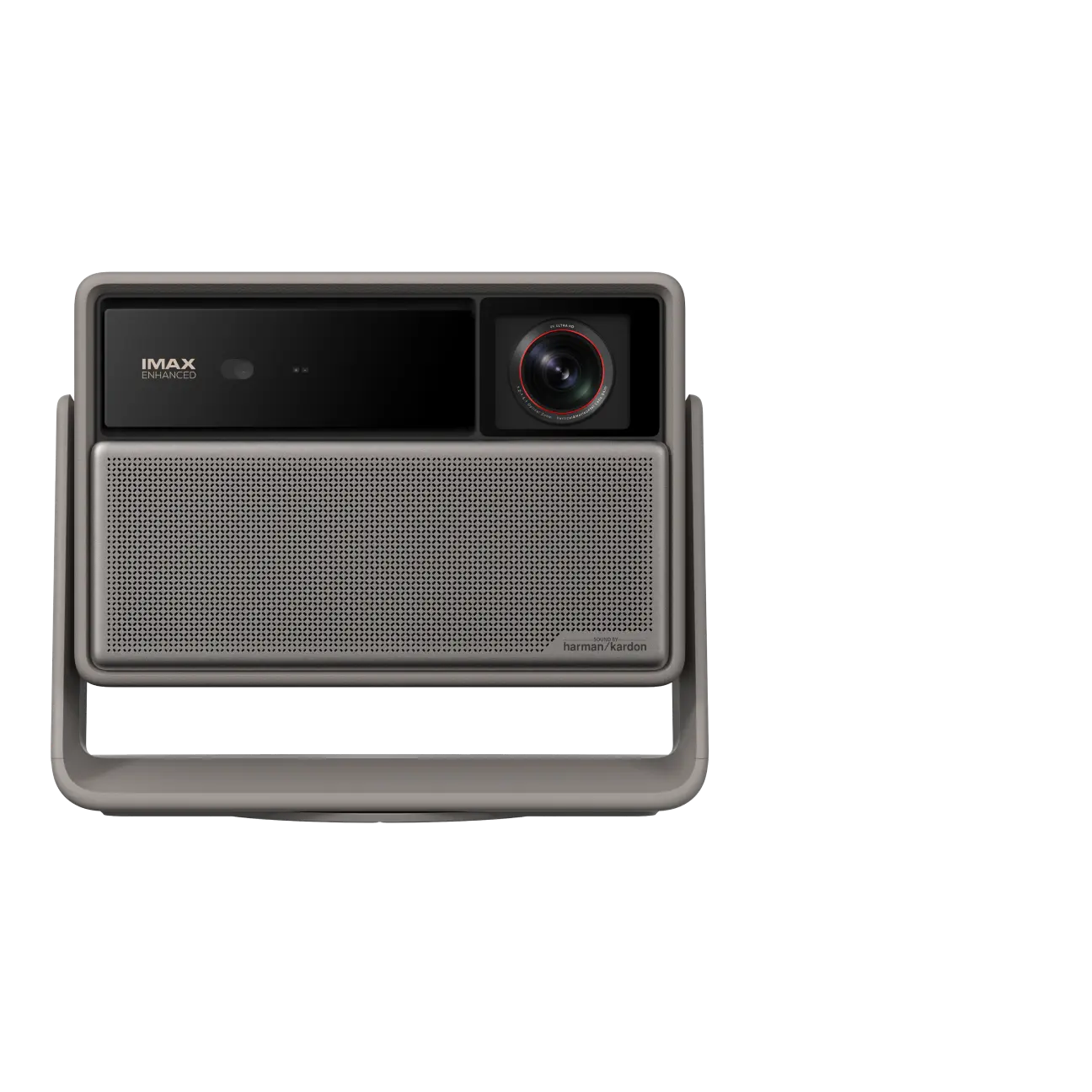
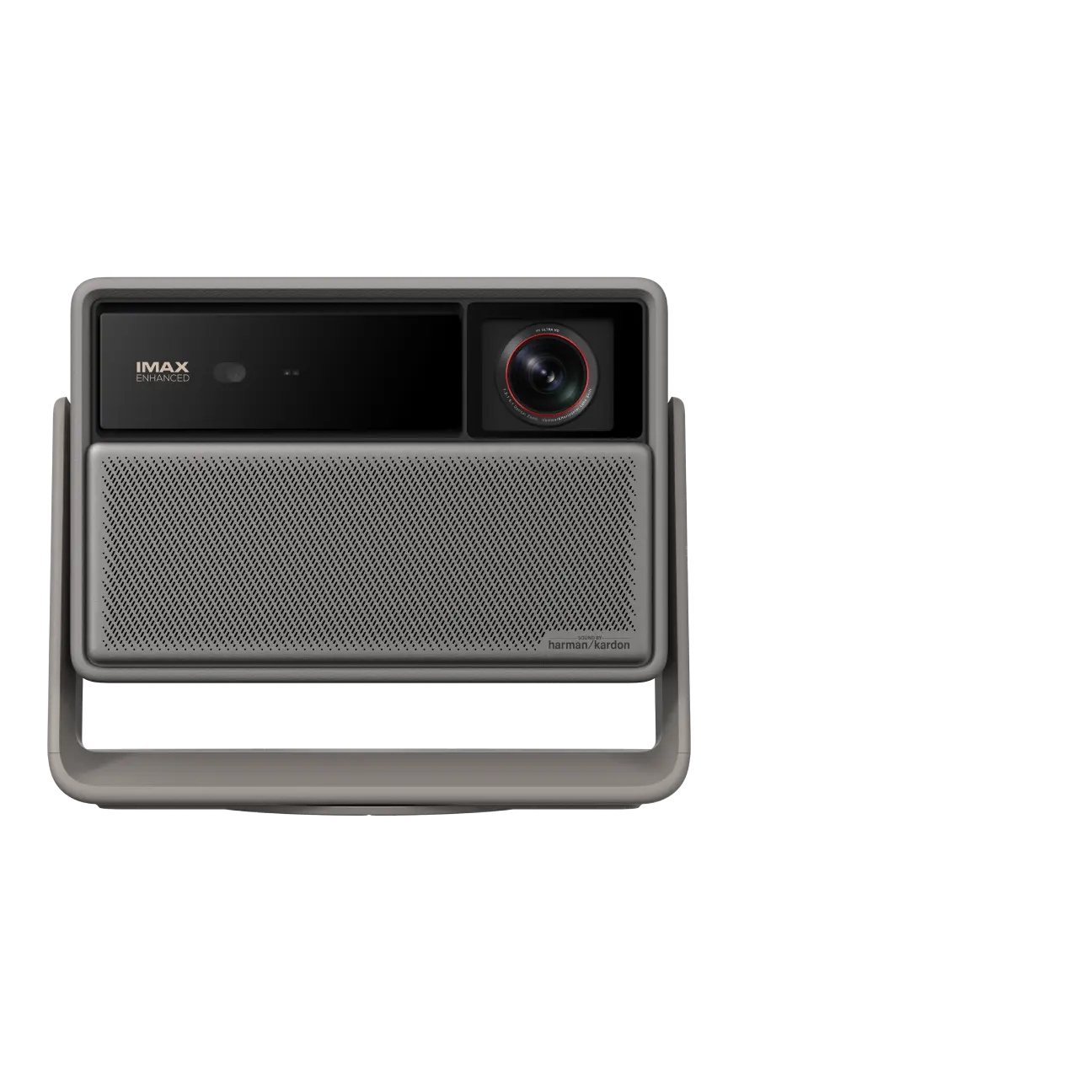
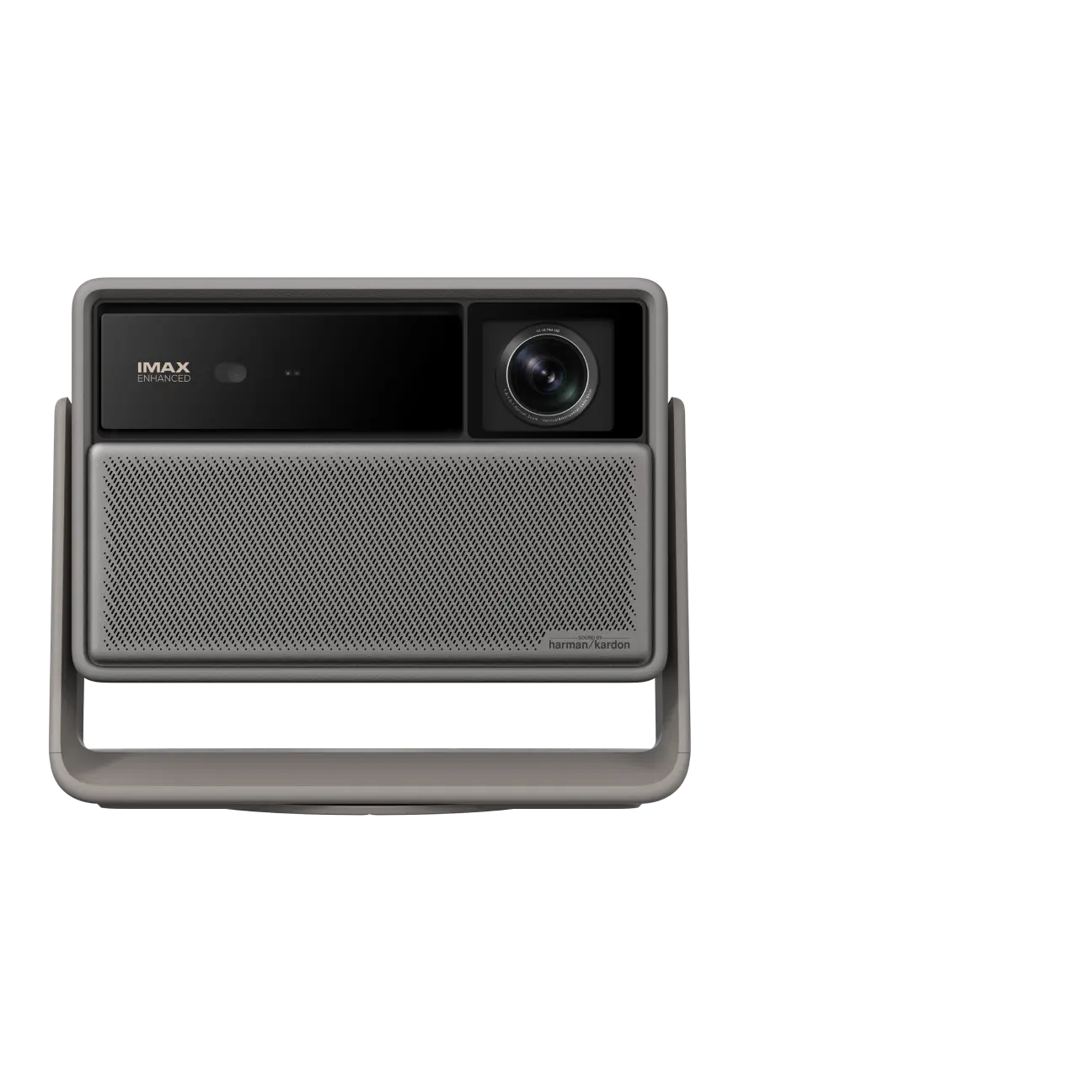
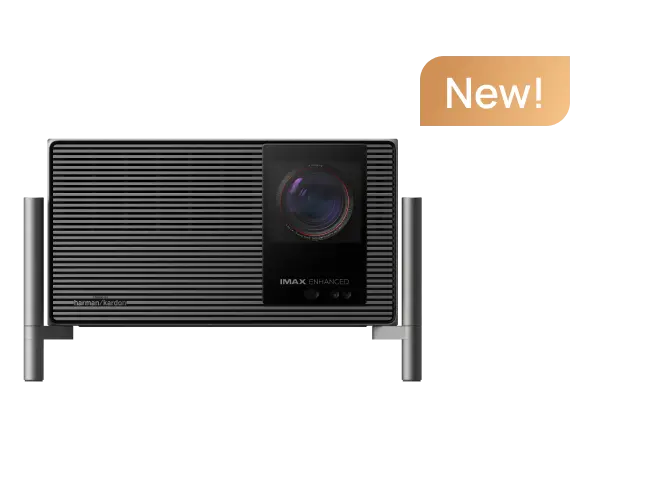
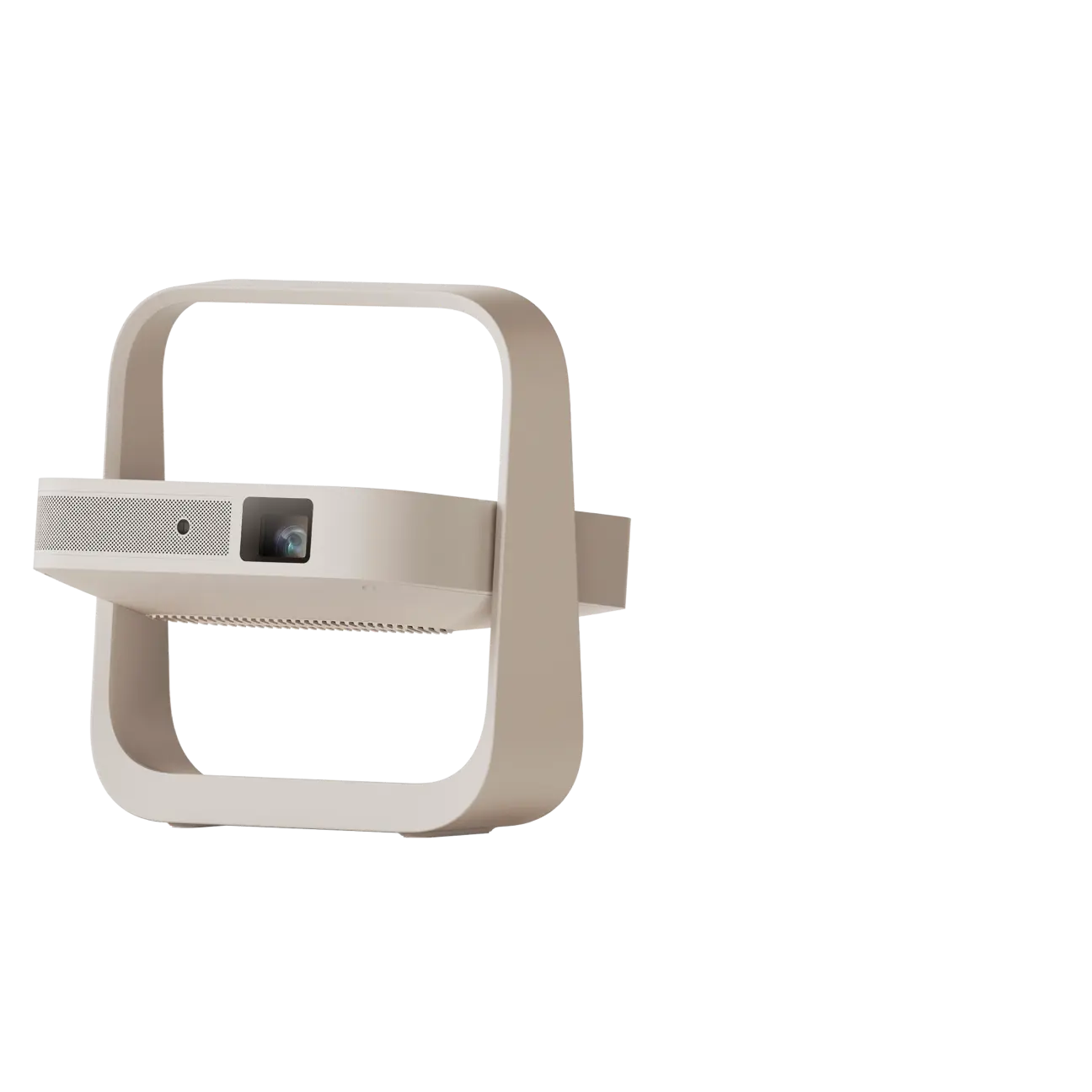
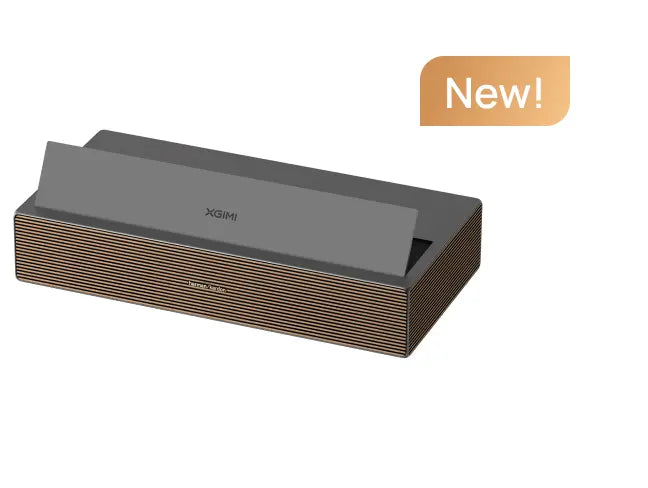
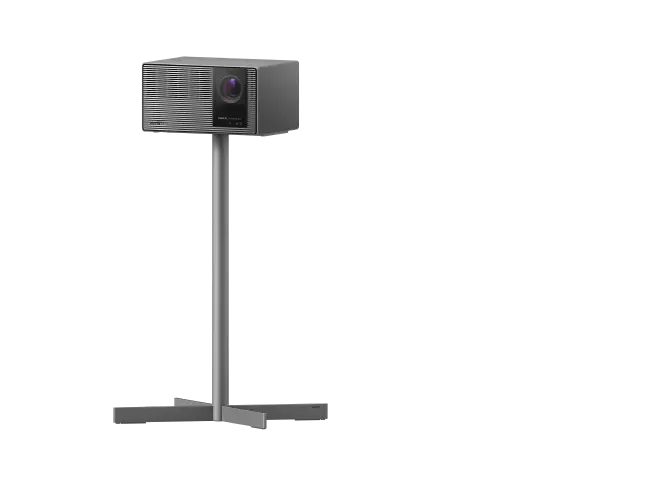
When it comes to design, the TITAN Noir Max feels a lot closer to the original TITAN than anything else in XGIMI’s lineup. The two share a similar overall look, with the TITAN being a bit wider, while the TITAN Noir Max is slightly taller. Right away, it gives off a different impression compared to XGIMI’s more portable, lifestyle-focused models.
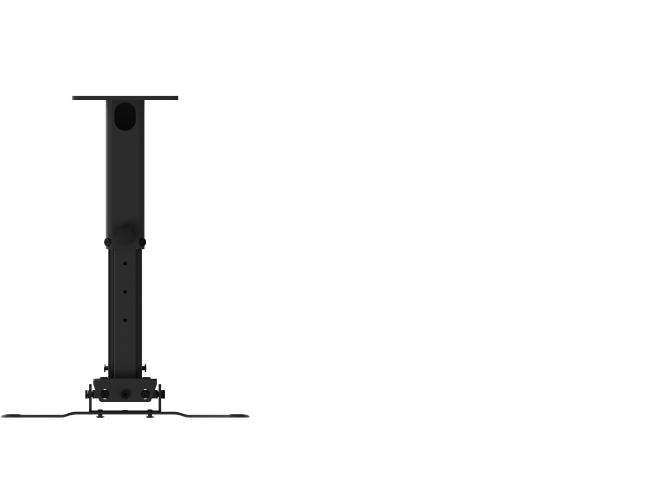
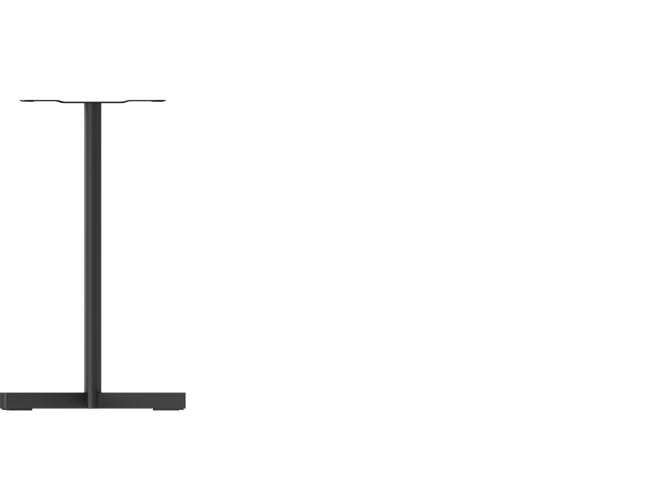
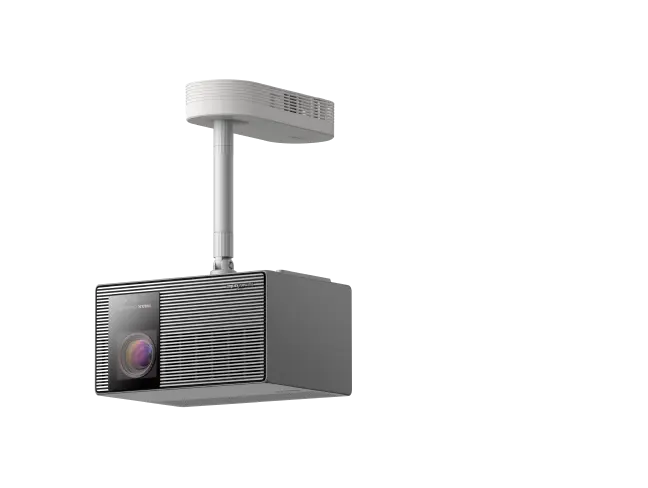
This is clearly designed more for a permanent setup rather than something you’re moving from room to room, though it can easily be done due to its size. The chassis rests on four solid metal feet that raise it slightly off the surface, giving it a stable, planted feel when placed on a shelf. The feet are also height-adjustable, which helps with fine positioning. They can be removed entirely as well, making ceiling installation much more straightforward without the need for awkward adapters or third-party hardware.
● Silver Color, Lens Placement, Size, and Weight
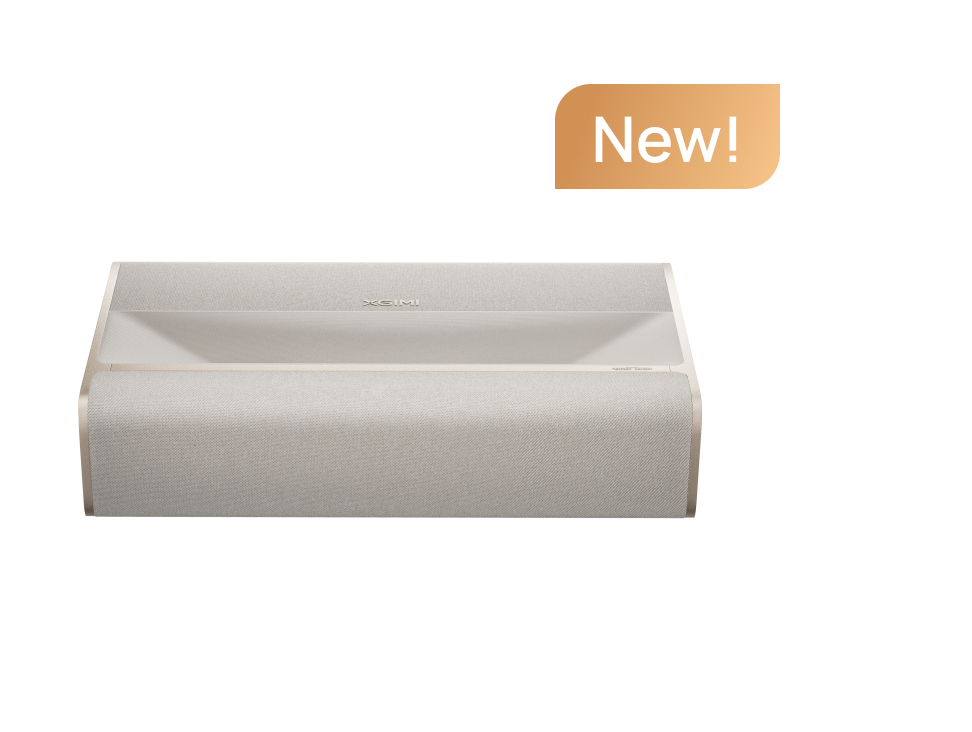
The 4K smart projector comes in a silver color with a silver-accented front panel that adds a bit of warmth. One thing that stands out right away is the lens placement. It’s offset to the right when you’re facing the projector, rather than being centered, which is something to keep in mind during setup. The front panel also houses an array of sensors. On either side of the lens are dual time-of-flight sensors and dual camera modules, forming a quad-lens system used for distance measurement, automatic image correction, and eye-protection features. In terms of size, the projector measures 14.9-inches wide, 11.3-inches deep, and 9-inches tall, and it weighs about 17.8 pounds.

● Connectivity: Three HDMI 2.0 Inputs, Two USB Ports, and More
Around the back, you get two HDMI 2.0 inputs, with one supporting eARC. Around the back, you get two HDMI 2.0 inputs, with HDMI 1 supporting eARC. There are also USB 3.0 and USB 2.0 ports for media playback or accessories, along with both analog audio output and optical digital output if you’re running external audio. For wired networking, there’s a Gigabit Ethernet port.
Like some of XGIMI’s other projectors, there is an external power brick, which is something to keep in mind if you’re planning to install it on the ceiling. There's also built-in Wi-Fi and Bluetooth, making it easy to control accessories or external speakers without running additional cables if you don’t need to.

3. Remote: Common Buttons are Illuminated
The TITAN Noir Max ships with a Bluetooth remote that’s very similar to what we saw with the TITAN. It strikes a nice balance between style and usability. One thing that always stood out to me on older XGIMI remotes was the lack of a backlight, and just like the HORIZON 20 from last year, that’s been addressed here. It doesn’t light up every single button, but the ones you’re most likely to use are illuminated.

The remote itself is slim and lightweight, with a brushed metal finish that gives it a more solid feel than you’d expect at first glance. Up top, you’ve got quick-access buttons for picture presets like Standard, Movie, Vivid, and TV, along with dedicated buttons for input selection and automatic focus and adjustment. Just below that is the directional pad, along with Home and Settings buttons that are easy to reach without having to shift your hand around too much.

4. Setup and Picture Modes
Unlike XGIMI’s lifestyle projectors, there are no built-in smart TV features here, and I’m perfectly fine with that. I’m using an Apple TV in my setup anyway, and I’d much rather see the focus go toward image quality and optics than an onboard streaming platform I’m not going to use.
Setup itself is pretty straightforward. Features like autofocus, optical zoom, and motorized lens shift, which you typically don’t get on lifestyle projectors, make dialing in the image a lot quicker and far less frustrating.

I tested the 4K projector in a couple of different setups. In my light-controlled media room, I had it positioned about 14.5 feet back, projecting a 138-inch 2.35:1 image onto a Stewart Filmscreen StudioTek 130 G4. I also spent some time with it in a brighter living room setup, where it was placed roughly 11 feet from a NothingProjector 120-inch 16:9 ALR screen.

The TITAN Noir Max includes a pretty full set of picture modes. For SDR, you get Standard, Movie, Sports, FILMMAKER Mode, ISF Day, ISF Night, and a Performance mode that really pushes brightness, but comes with a noticeable green shift that makes it hard to use for anything other than quick demos. There’s also a custom mode that you can name and tweak however you want. HDR content carries over most of those same modes, with additional options like IMAX Enhanced, along with Dolby Vision Dark and Dolby Vision Bright.

If you want to go beyond the presets, there’s a good amount of control here. You get both 2-point and 11-point white balance adjustments, along with gamma controls for dialing in grayscale performance. For gaming, there’s a dedicated low-latency interface with different presets like Standard, FPS, RPG, RTS, and Sports. Fan noise is also pretty well controlled. I measured it at around 35 dB from about three feet away with the brightness slider set to 10, and it drops off even more at a normal seating distance.
As for the menu system, it’s pretty extensive. There’s a lot here, and you can definitely spend some time digging through it, but that’s not necessarily a bad thing. Everything from AI processing options to iris controls and more advanced image adjustments is available, so if you like to fine-tune things, there’s plenty to work with.

5. Performance: Clarity, Brightness, Contrast, Colors, and More
Full disclosure before diving into performance, the unit I tested is still an engineering sample. XGIMI did send over the latest firmware and told me it’s very close to the final shipping version, but I always like to mention that up front.
● Sharp and Defined, with AI-based Features
One of the biggest strengths of DLP has always been sharpness, and the TITAN Noir Max is no exception. The image comes across very crisp and defined. Even though it’s not a native 4K projector and relies on pixel shifting, it resolves fine detail extremely well and does a surprisingly good job with 1080p upscaling. There are also a few AI-based features on board, like AI-SR (Super Resolution) and AI contrast, both of which aim to improve perceived detail and clarity.
Watching Bugonia, those processing features made a noticeable difference. With them enabled, finer details stood out more in close-ups. You could pick up things like individual strands of hair and subtle textures in clothing, like the fabric on Emma Stone’s jacket. With the processing turned off, those details were still present, just a bit more subdued. The image definitely looks sharper with these features on, but I can also see some people preferring the slightly softer, more natural look with them disabled.

● Anti-RBE Technology for Reduced Rainbow Effect
Rainbow effect is always something worth talking about with single-chip DLP projectors, especially since a lot of people are sensitive to it. I am too. The TITAN Noir Max includes XGIMI’s Anti-RBE technology, which is designed to reduce that effect by blending color sequences more effectively. Normally, RBE shows up as flashes of red, green, and blue in high-contrast or fast-moving scenes.
When I first saw the claim, I figured it was more marketing than anything, but after spending about a month with it, it’s actually doing something meaningful. It doesn’t completely eliminate RBE, but it cuts it down quite a bit. I’d say it reduces it by around 90–95% in my experience. And unlike what I’ve seen on some other models, there’s no added noise or high-pitched whine when the feature is enabled. I actually preferred leaving it on for most of my testing.

Now, while I didn’t really notice any RBE during normal viewing, I did pick up on a bit of laser speckle in certain scenes, mostly in brighter red areas. Laser speckle is a different artifact that can show up on laser-based projectors. Instead of color flashes, it looks more like a fine, grainy shimmer or noise across parts of the image. It’s caused by the way coherent laser light reflects off the screen surface and interferes with itself. It’s not something you see all the time, and it really depends on the content and screen, but it’s worth mentioning since you can sometimes spot it with laser projection.

● Brightness
Brightness is another area where this 4K home theater projector stands out. In its brightest setting, Performance mode with the iris fully open, I measured 8,721 ANSI lumens, which actually comes in a bit above XGIMI’s spec. However, this is not a mode most people will want to use regularly. There’s a noticeable green shift, and the fan noise ramps up quite a bit.
After calibration, ISF Day mode with the iris open came in around 4,233 ANSI lumens, which is still a lot of light output and more than enough for HDR. FILMMAKER Mode landed in a similar range, while Standard pushed slightly higher at around 4,385 ANSI lumens.
If you enable the 10+ laser setting, brightness can reach roughly 5,420 ANSI lumens, but that also brings increased fan noise and pushes color accuracy off, with average delta E rising to around 12.4.

Adjusting the iris has a pretty noticeable impact on brightness. With the iris set between f/2.0 and f/4.0, output in ISF Day mode ranges from about 3,100 down to around 2,000 ANSI lumens. Even at those lower levels, there’s still plenty of brightness on tap. In Godzilla vs. Kong, especially during the neon-lit fight scenes, highlights had a lot of pop. The purples and blues stood out without looking overblown, and the overall image maintained a good sense of depth.
With several hundred nits actually usable on screen, HDR looks more impactful here than what you typically get from a lot of traditional home theater projectors. Highlights hold their intensity without clipping, and brighter elements don’t flatten the rest of the image.
● Color
Out of the box, ISF Night mode was the most accurate, with an average delta E of around 1.54. The projector covers around 98.9% of DCI-P3 and about 95.6% of BT.2020. In Elemental, especially during the scene where Wade holds Ember’s hand for the first time, the color really stood out. Ember’s orange glow had that warm, slightly fiery look without feeling oversaturated, and the purples in the background had a nice depth to them. The TITAN Noir Max also handled color gradations well with no obvious banding.
● Black Level Performance and Contrast
Black level performance and contrast are really what this projector is all about. A big part of that comes from XGIMI’s Dynamic Black Level Enhancement (DBLE), which adjusts the laser output in real time depending on what’s on screen. In darker scenes, it pulls the light output down to help deepen blacks, and then opens things back up for brighter scenes so highlights don’t feel limited. Native contrast measured at 2,022:1 at a mid-throw distance in FILMMAKER HDR mode, which is already strong for a projector in this range. When you factor in the iris, closing it down to F7.0, sequential contrast jumps to around 5,863:1, which is a pretty noticeable improvement.
Going back and forth between the different modes, the results really depend on what you’re watching. Dynamic Contrast does help overall contrast, but in darker scenes, it can come at the expense of some shadow detail. I found myself leaving it on for brighter content and turning it off when watching darker movies. AI Contrast is a bit different. It does add some perceived depth, but it also introduces a bit of noise into the image. It’s not something you’ll really notice from a normal seating distance, but if you’re sitting closer, around five feet or so, it’s easier to pick up on, so I’d probably leave it off.
● DBLE

Compared to the original TITAN, I didn’t notice much in the way of color shifting with DBLE enabled, which is good to see. XGIMI also includes a “Dynamic Black Level Correction” slider that runs from –40 to +40, which is there to help compensate for any color shifts caused by the dynamic laser adjustments. Once I dialed that in, things stayed pretty consistent, and I didn’t run into any noticeable color issues during testing. One thing worth mentioning is that DBLE didn’t originally work with Dolby Vision on some of XGIMI’s earlier models, but that’s been addressed here. With the latest firmware, it now works properly with Dolby Vision content.
Watching 1917, especially the night sequence in the burning village, really shows what this projector can do with contrast and HDR. You’ve got bright flames lighting up the scene. The highlights from the fire stay bright and intense without blowing out, while the darker areas still hold onto detail. You can make out textures in the walls, debris on the ground, and subtle movement in the shadows without everything just collapsing into black.
● Motion Handling
Motion handling is another area where the TITAN Noir Max performs well, especially once you spend a little time dialing it in. XGIMI includes MEMC here, and when it’s enabled, the difference is pretty easy to spot. Fast pans and quick camera movements look smoother, and detail holds together better during action-heavy scenes. I found the Medium setting to be the sweet spot. It smooths things out without pushing too far into that overly processed look. The Low setting helps a bit but doesn’t completely get rid of judder on more demanding 24p content, while the higher settings start to introduce that soap opera effect that most people try to avoid.
● MEMC
MEMC isn’t something everyone is going to want to use. If you prefer the look of native 24p, turning it off gives you that more traditional, cinematic feel. It’s nice that XGIMI gives you the option either way. For sports, though, it does help. Watching basketball and baseball, the Medium setting made fast camera pans easier to follow, with less stutter and a more consistent image during motion.
6. Gaming: Low Input Lag, High Refresh Rate, and ALLM Supported
Gaming on the TITAN Noir Max feels like something XGIMI put real thought into. Along with the features mentioned earlier, input lag performance is genuinely impressive for a projector. XGIMI claims 1080p at 240 Hz delivers a 1 ms response time, while 4K at 60 Hz comes in at 3 ms. Technically, that’s accurate, but there’s a bit of fine print. Since this uses a newer DLP controller, the image refreshes from top to bottom. Using my Leo Bodnar tester, I measured around 3 ms of lag at the top of the screen at 4K/60, but by the time you get to the bottom, it was closer to 17.6 ms. Either way, it ends up being a really strong result for a projector.
It also supports ALLM, so it automatically switches into its low-latency mode when it detects a console, which keeps things simple and avoids having to dig through menus. This ends up being a really good gaming projector for most people. Controls feel responsive, and playing on a screen this large adds a level of immersion that’s hard to ignore. If you’re used to ultra-low latency monitors, you might notice the difference in more demanding situations, but for the majority of players, it’s more than capable.
7. Audio: Built-in Dual 12W Harman Kardon Audio System

Given XGIMI’s background with lifestyle projectors, it’s not surprising that the TITAN Noir Max includes a built-in 2 x 12-watt Harman Kardon audio system, and for what it is, it does a decent job. Dialogue comes through clearly and stays easy to follow even at moderate volume levels, which makes it perfectly usable for casual viewing. Vocals sit nicely in the mix without sounding thin or harsh. There’s also a bit of width to the presentation, helped by Virtual:X, which does a respectable job of opening things up and giving the sound a little more space than you’d expect.
Where it starts to fall short is with more demanding content. Low-end output is pretty limited, so you don’t get much weight behind action scenes or movie soundtracks. It’s fine as a built-in solution or for temporary setups, but once you start pairing it with a screen this size and image quality, the audio becomes the limiting factor. For that reason, it makes a lot more sense to run it through a soundbar or a full surround system to really match what the projector is capable of.

Final Thoughts
The TITAN Noir Max really feels like XGIMI taking that next step we talked about earlier. Instead of staying in the lifestyle lane, this is clearly aimed at a more dedicated setup, and the focus on contrast shows right away. Between the native performance and the addition of a dynamic iris, which is something you rarely see at this price point, it delivers a level of depth and black level performance that really stands out.
At its current Kickstarter price of $2,799, it’s hard to ignore. Once it moves up to its full retail price of $5,999, the conversation changes a bit, and you start comparing it more directly with some competitors. Even then, though, the feature set and performance still make a strong case for itself. I mentioned this in my TITAN review as well, but this really feels like a major step forward for XGIMI, and I’m glad to see the direction they’re heading in. It also makes me curious to see what comes next, especially if they can combine some of the strengths from both models into a release down the road. For its overall performance, the XGIMI TITAN Noir Max earns an AVSForum Top Choice for 2026.
Pros
- Dynamic Iris
- Excellent contrast
- High brightness
- Anti-RBE works well
- Wide color coverage
- Motorized lens shift and zoom
Cons
- Performance mode color shift
- AI contrast may add some image noise
- No 4K 120Hz support


