
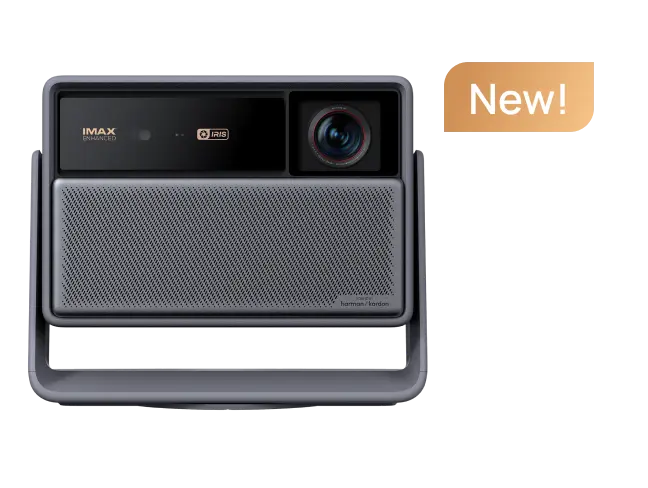
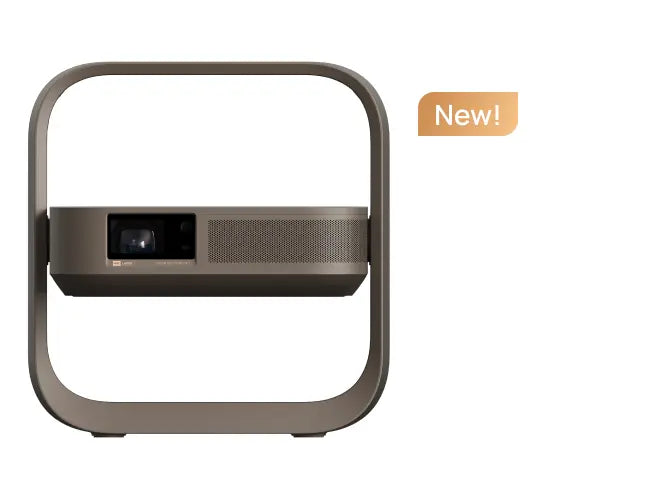
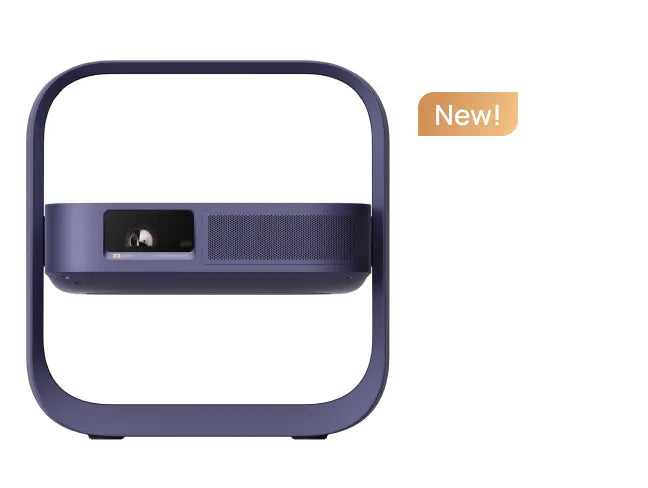
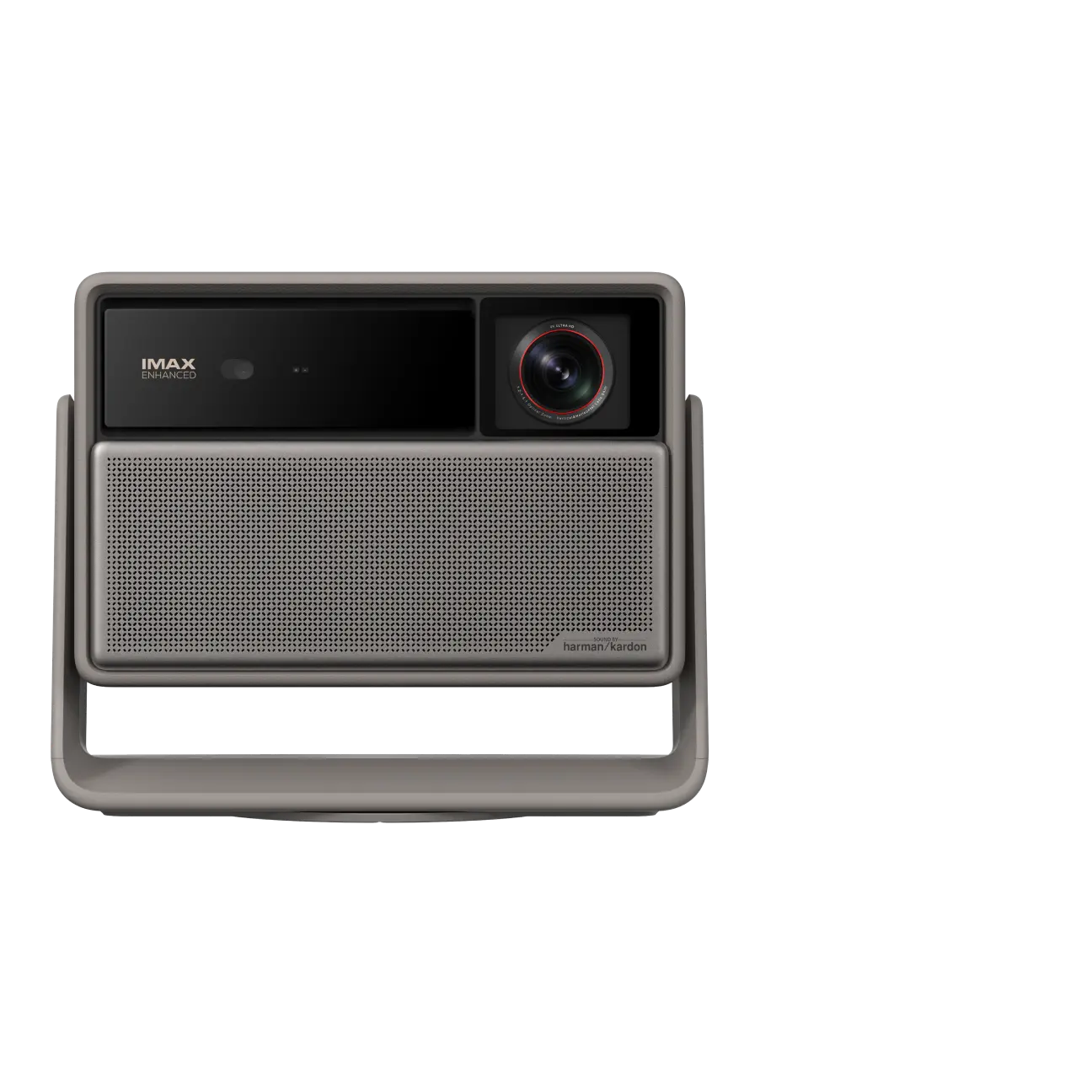
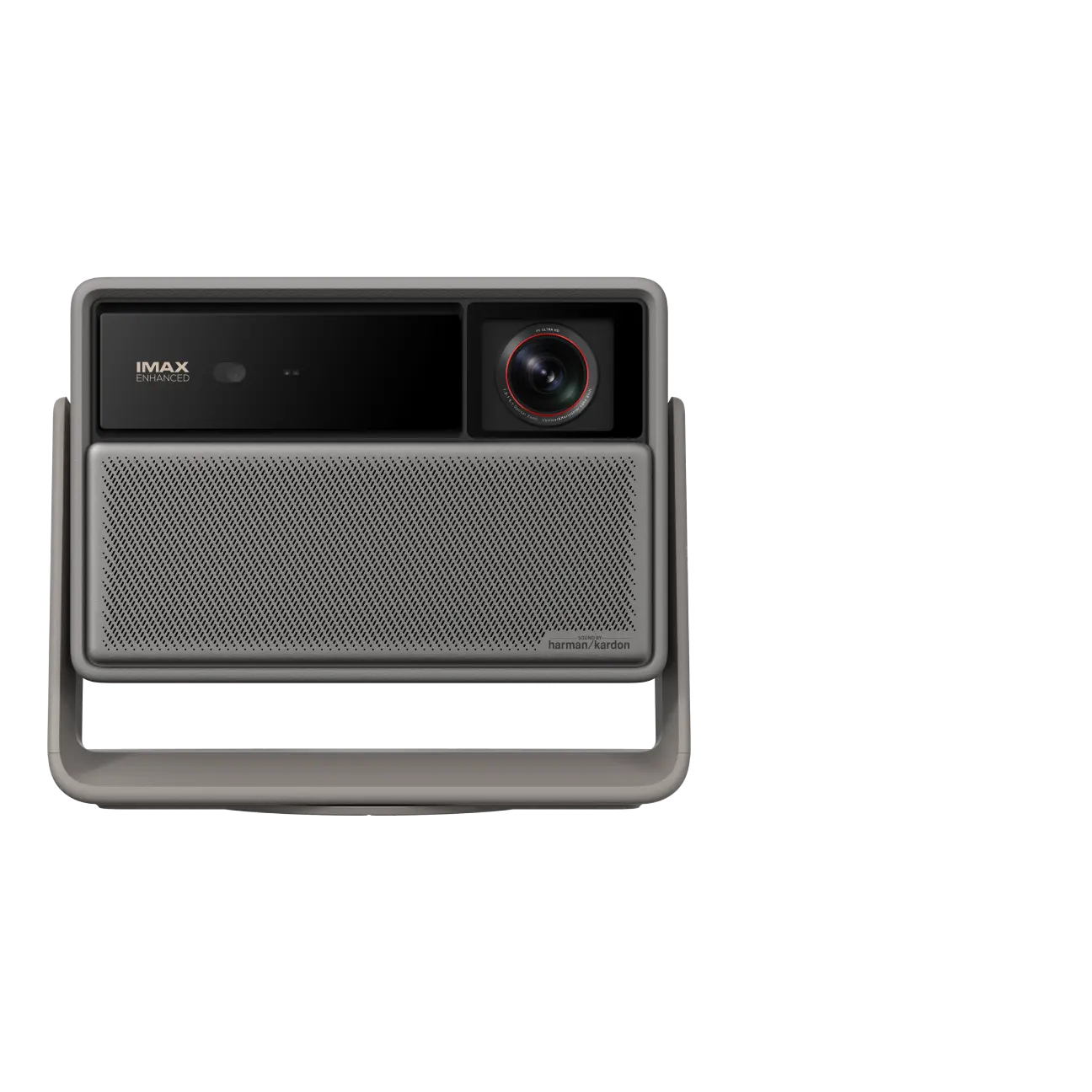
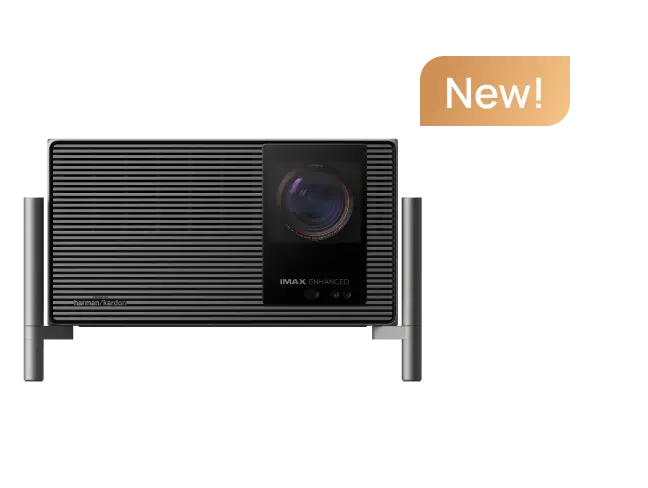
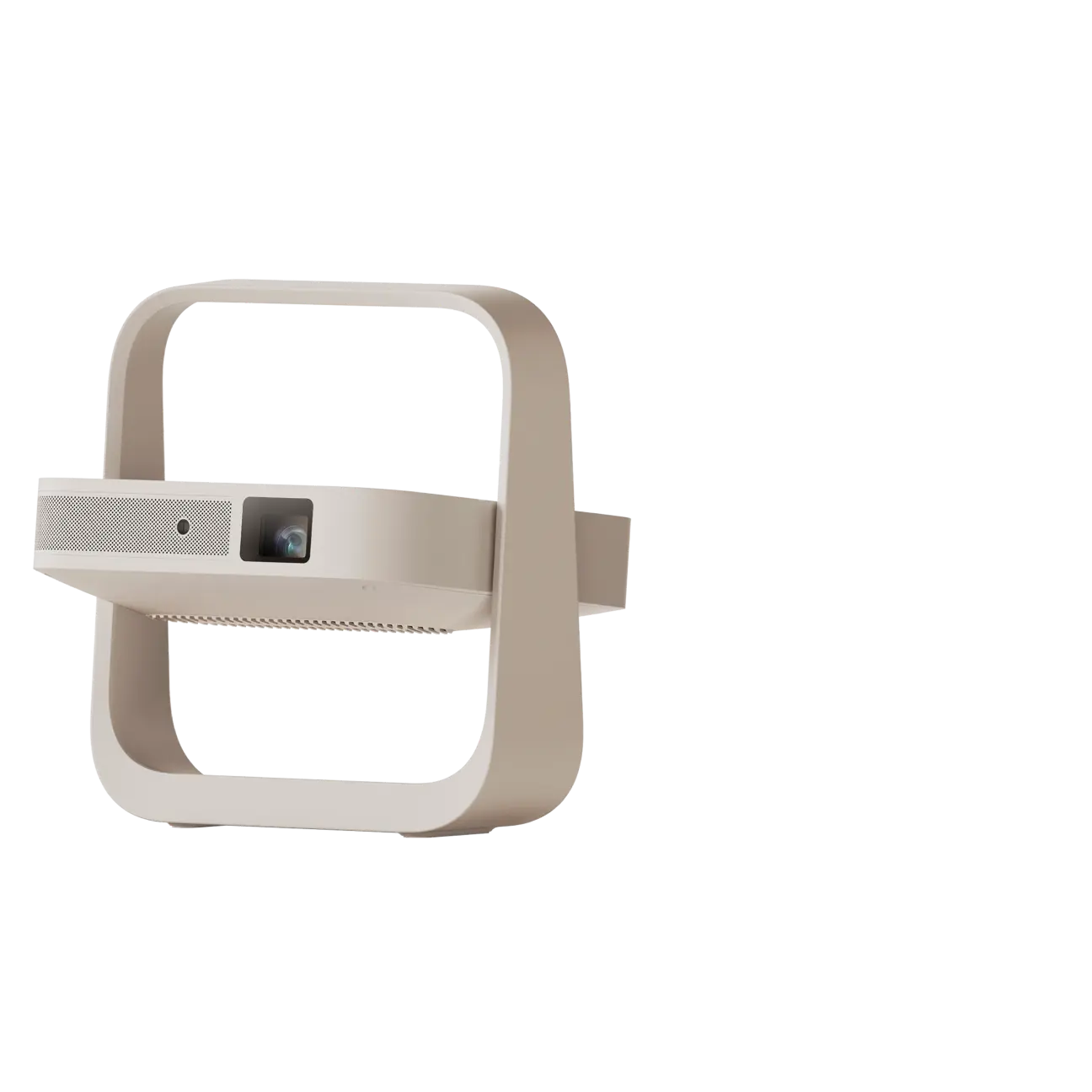
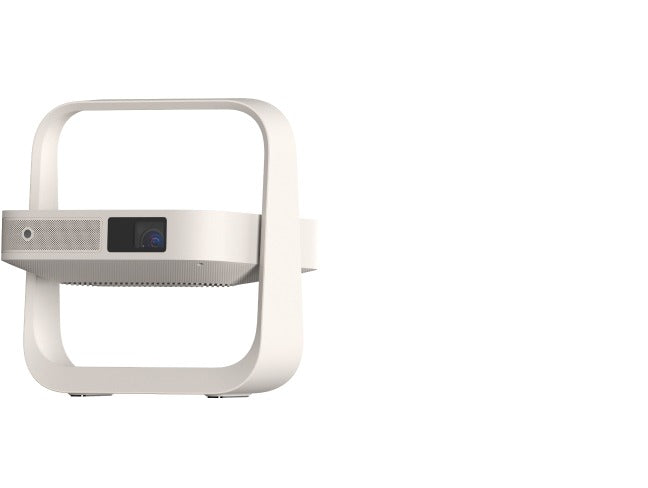
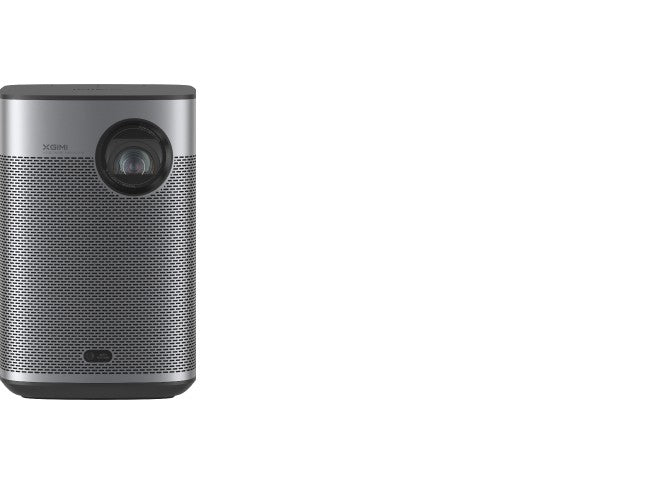
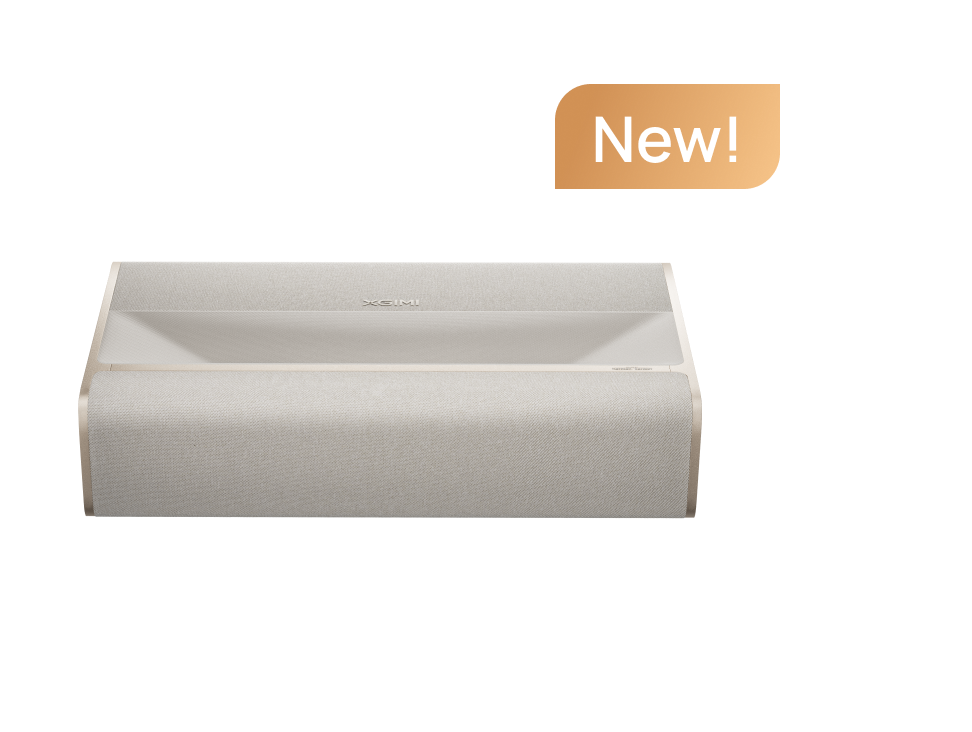
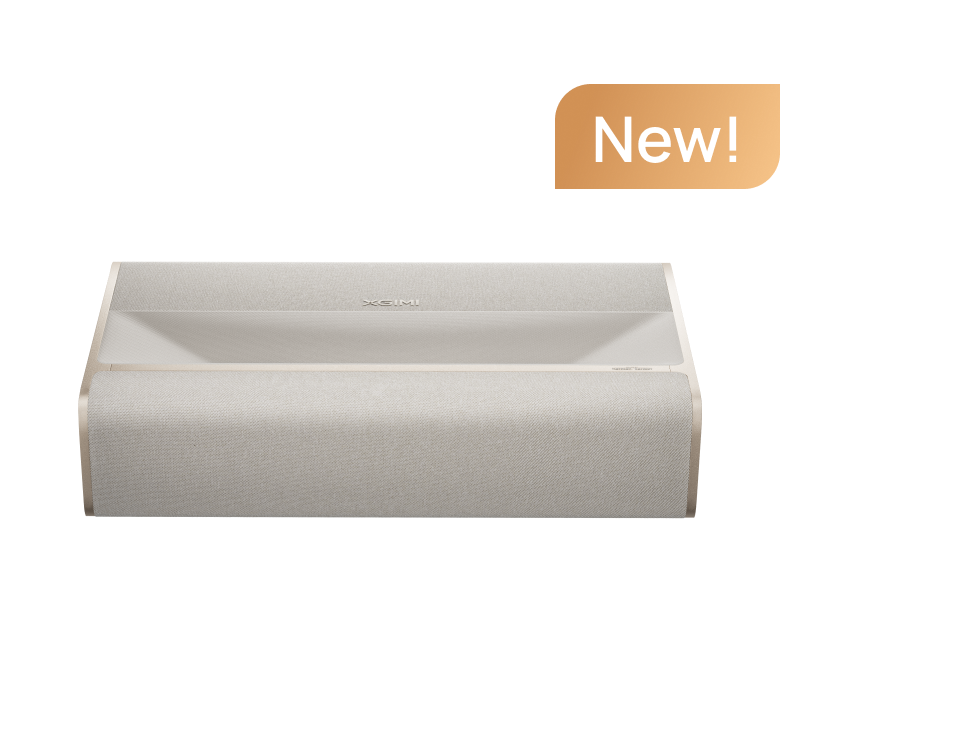
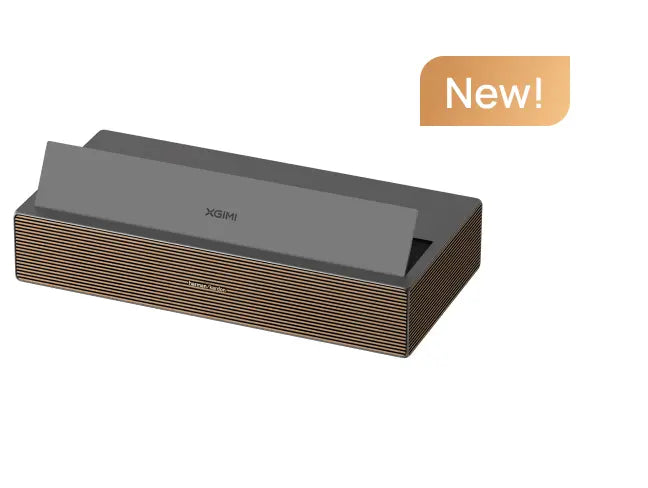
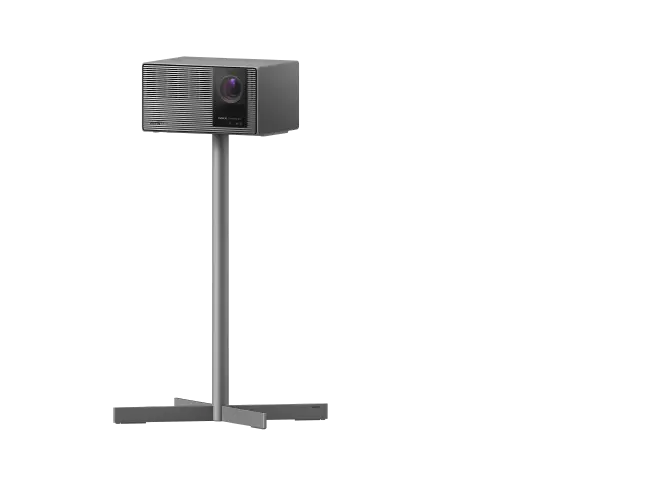
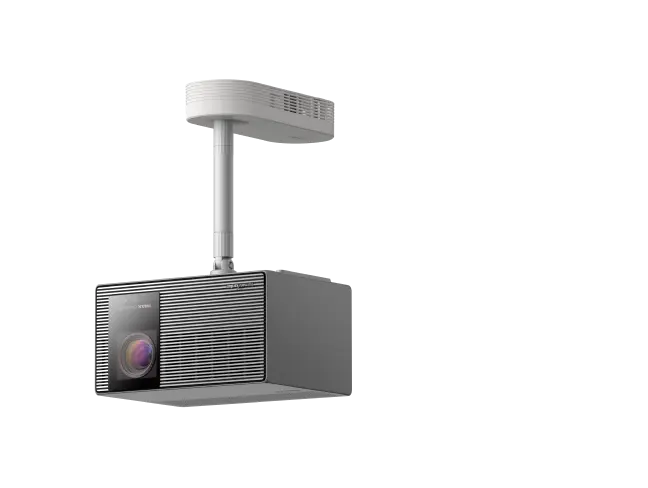


3D support varies by model. A 4K rating describes the projector's 2D resolution; 3D is a separate playback mode that depends on the source, the projector menu, and the glasses. The HORIZON 30 series lists 3D support on all three models, but the picture only works when the source layout and projector setting match.
What 4K 3D Means on a Projector
4K describes 2D resolution. A projector can accept a 4K signal and display 3D at a lower per-eye resolution because the left and right views share frame rate, processing, and bandwidth. The exact result depends on the source and the model. Check the manual for supported 3D formats before buying discs or building a library.
The HORIZON 30 Pro, Max and Ultra Max use a DLP display path with a 0.47-inch DMD and list 3D as supported. DLP matters because compatible active shutter glasses have to alternate views in sync with the projector. A mismatch can appear as flicker, crosstalk, or a double image.
3D Formats You Will See Most
Two common home 3D layouts are Side-by-Side and Top-and-Bottom. Some XGIMI models also list Frame Packing.
| Format | What the source contains | Typical source |
|---|---|---|
| Side-by-Side (Left/Right) | Two squeezed images sit next to each other. | Some broadcasts, downloads, and discs |
| Top-and-Bottom (Up/Down) | One squeezed image sits above the other. | Some discs and downloaded files |
| Frame Packing | A frame-based 3D transport format listed by some XGIMI models, often alongside Top-and-Bottom support. | Compatible players, discs, and files |
Side-by-Side packs the left and right views next to each other; Top-and-Bottom stacks them. Use the name that matches both the file and the projector menu, because labels vary between Left/Right or Side-by-Side and Up/Down or Top-and-Bottom.
The XGIMI 3D glasses guide uses Up/Down 3D and Left/Right 3D. An automatic option may identify common files, but it is not reliable for every disc or download. If the image remains doubled, switch the 3D format before changing other settings.
article_product1
How DLP-Link Active Shutter Glasses Work
DLP-Link is one sync method used by DLP projectors. On the TITAN Noir Series, the TITAN Noir Series DLP-Link compatibility guidance explains that the DLP chip inserts synchronization signals between the left-eye and right-eye frames. Photosensors in active shutter glasses detect those signals and open and close the lenses in step with the projected image.
The TITAN Noir Series is compatible only with DLP-Link active shutter glasses. It does not support red/blue anaglyph glasses, passive polarized glasses, or RF glasses. Because the series uses a newer DLP driver chipset, XGIMI recommends its own 3D glasses for optimized compatibility. For other models, check the model-specific accessory guidance rather than assuming that every pair marked DLP-Link will perform the same way.
Active shutter glasses need power and a clear view of the screen. XGIMI's general guide lists around 2-3 hours of charging time. It also notes that the glasses enter standby after 5 seconds without a 3D signal and flash a green LED every 5 seconds in standby. A red LED appears during charging and turns off when the battery is full. LED behavior can differ by accessory, so confirm it against your model's guide.
How to Set Up 3D Mode on a Projector
- Play a 3D title and confirm that the source is actually stereoscopic. A 2D copy will not produce a usable 3D image, regardless of the projector setting.
- Open the projector menu. Menu names and locations vary by model. On the TITAN Noir Series, for example, the official sequence is Settings > Brightness & Display > 3D Settings.
- Select the 3D format that matches the source. Use Side-by-Side or Left/Right for a side-by-side file, and Top-and-Bottom or Up/Down for a stacked file.
- Power on the glasses and let them sync. A slight overlap or blur on the screen before you put on the glasses can mean 3D is active.
- Adjust the glasses until the image is clear, and confirm that the battery is charged.
- Dim the room, sit within the viewing cone, and keep head tilt modest. Extreme angles can make crosstalk more noticeable.
The exact path can differ. Some models place 3D controls in a shortcut menu as 3D Video Setup, while others use Settings. For the TITAN Noir sequence and source requirements, see the TITAN Noir Series 3D mode instructions.
Picture Settings That Affect 3D
- Brightness and picture mode. The glasses reduce light, so 3D usually looks dimmer than 2D. Darken the room and try a brighter picture mode, but watch for washed-out blacks.
- Keystone and geometry. Heavy correction resamples the image and can soften detail. Keep the projector and screen aligned where possible, then use correction only as needed.
- Screen size. The HORIZON 30 series lists a 60-150 inch image range. A larger image spreads the same light over more area, which can make 3D look dimmer.
- Seating distance and viewing angle. Move back if the edges show more crosstalk. Keep the seating position closer to the center of the screen.
- Session length. Take breaks if your eyes feel tired. Stop viewing if discomfort continues, and check the source, glasses, and picture settings before trying again.
How to Fix Common 3D Projector Problems
From 3D glasses not syncing to images appearing blurry or distorted, these 3D projector troubleshooting tips will help you identify common issues and find practical solutions.
| Symptom | Likely cause | What to try |
|---|---|---|
| Two images remain separate | The 3D mode does not match the source layout | Switch between Side-by-Side/Left-Right and Top-and-Bottom/Up-Down |
| Image looks doubled before putting on glasses | 3D may already be active | Put on powered glasses and let them sync. If the image remains doubled, check the selected format |
| Flicker or intermittent sync | Low glasses battery or interrupted sync | Charge the glasses, power-cycle them, and stay within their working range |
| Picture looks dim | The glasses reduce light and room light adds competition | Darken the room, try a brighter picture mode, or reduce an oversized image |
| Ghosting around the edges | Viewing angle, seating position, screen behavior, or image geometry | Sit closer to the center, reduce extreme tilt, review keystone correction, and compare the center of the image |
| 3D option is unavailable | The source is not 3D or the selected format is not supported | Confirm the source and check the model manual or help article |
What to Check Before Buying
- 3D support on the exact model. Check the specification for the model and model year you are buying, not just the product family.
- Supported formats. Confirm that the projector lists the layouts used by the discs, files, or player you own.
- Glasses type. DLP-Link active shutter glasses differ from passive polarized cinema glasses and RF glasses. Check the model's compatibility note.
- Brightness in 3D. A 3D image is usually dimmer than a 2D image at the same setting. Review real-world impressions when 3D brightness matters to you.
- Content availability. Streaming support for 3D varies by app, region, and title. Check the titles you plan to watch.
- Screen and room. Screen gain, viewing angle, ambient light, and seating position all affect perceived contrast. Check the screen maker's guidance for 3D and ALR surfaces.
Which XGIMI Projectors Support 3D?
- Note: For accurate and up-to-date product details, please refer to the product page.
- Last updated: November 2026.
|
Models |
3D support |
|
HORIZON 30 Pro, HORIZON 30 Max, HORIZON 30 Ultra Max |
Yes |
|
HORIZON 20, HORIZON 20 Pro, HORIZON 20 Max (including Limited Edition) |
Yes |
|
HORIZON S Max, HORIZON S Pro |
Yes, Frame Packing and Side-by-Side |
|
HORIZON Ultra |
Top-and-Bottom, including Frame Packing, and Side-by-Side |
|
HORIZON Pro, HORIZON (1080p) |
Yes, Frame Packing and Side-by-Side |
|
TITAN, TITAN Noir, TITAN Noir Pro, TITAN Noir Max |
Yes |
|
AURA, AURA 2 |
Yes, Frame Packing and Side-by-Side |
|
MIRA, MIRA Pro |
Yes, Frame Packing and Side-by-Side |
|
MoGo 2, MoGo 2 Pro (720p/080p) |
Top-and-Bottom, including Frame Packing, and Side-by-Side |
|
MoGo Pro, MoGo Pro+ (1080p) |
Yes, Frame Packing and Side-by-Side |
article_product2
FAQs about 3D Projectors
1. Do New 4K Projectors Still Support 3D?
Some do. Every HORIZON 30 model listed for the US market shows 3D support. Support still varies by brand, model, and model year, so check the exact specification.
2. Can I Use Cinema Glasses at Home?
Usually no. Cinema glasses may use passive polarization or a sync system designed for a commercial theater. The TITAN Noir Series supports only DLP-Link active shutter glasses, and other XGIMI models can differ.
3. Does 3D Work With Streaming Apps on Google TV?
It depends on the app, region, and title. The projector's 3D mode does not convert a 2D stream into stereoscopic video. Test the specific source before planning a viewing session.
4. Will 3D Reduce Resolution?
It can. The left and right views share signal bandwidth and processing, so per-eye resolution may be lower than the projector's 2D resolution. The result depends on the source format and the model.
5. Can I Use the Same Screen for 2D and 3D?
Often yes with DLP-Link systems, but the screen still affects brightness, viewing angle, and visible ghosting. Check the screen maker's guidance, especially for ALR and high-gain surfaces.
6. Is 3D Viewing Bad for Your Eyes?
Some viewers notice temporary discomfort. Take breaks and stop if symptoms continue. Correct format selection, glasses sync, seating position, and room lighting can all affect comfort. This guide is not medical advice.


